
What Counts as a Word?
First words are so fun, but as a parent, they can make you feel a little unsure, too. It’s like all of a sudden, you’re second-guessing and over-thinking every babble that comes out of their little mouth!
This post will teach you what counts as a word, the baby language milestones that lead up to first words, and when you can expect to hear your baby’s first words. And, because you play a key role in helping your child learn to talk, you’ll also learn what you can do to encourage your baby’s language skills during this period of rapid brain growth that they’re in.
When do kids start talking?
Babies typically start saying a few words around age 1, but they’re learning to communicate and meeting language milestones long before that!
Even if your baby isn’t talking yet, you probably already have very rich communication with them. We bet you’re cooing, laughing, pointing, and gesturing together all day long! This is great because these are all foundational baby milestones and skills that precede speech. So if your baby is doing them with you, they’re on their way to words!
Love keeping up with what your child is learning? Download our free talking milestones checklist and keep track of these important skills as they develop!
early speech sounds
A funny thing about speech is that not all speech sounds develop at the same time. Some are simpler than others for little mouths to master, so you can expect to hear early-developing sounds like b, m, p, and w first, as they begin to babble and talk.
Related: How To Encourage Babbling
This is why, even before they say intentional words in the proper context, you’ll likely find them stringing together sounds like ba-ba-ba and wa-wa. It’s also why toddlers can be a little difficult to understand in their first few years, while they’re still working on tougher sounds like “th”.
Related: Language Development Milestones for Toddlers
Late Talkers
Not all babies start talking right at 12 months. And that doesn’t necessarily mean they have a speech delay or disorder! If you have a toddler 18 months or older who isn’t talking and you’re feeling concerned, or you just want to help them along, here are some resources we’d recommend checking out:
What “Counts” As A Word For A Baby?
First words are a big milestone for your baby and for you. The first time you hear “mama” or “dada”? Come on! Is there anything better in the world?! But first words can leave some room for doubt, too. Especially if you’re waiting patiently to hear them say something, it might feel like you’re willing their words into existence or second-guessing everything you hear.
Did she say “mama” or was she just babbling?
Does “da” mean dog or was that just a coincidence?
Does “uh oh” actually count as a word or am I reaching? How about “moo”?
So let’s clear up what counts as a word for baby!
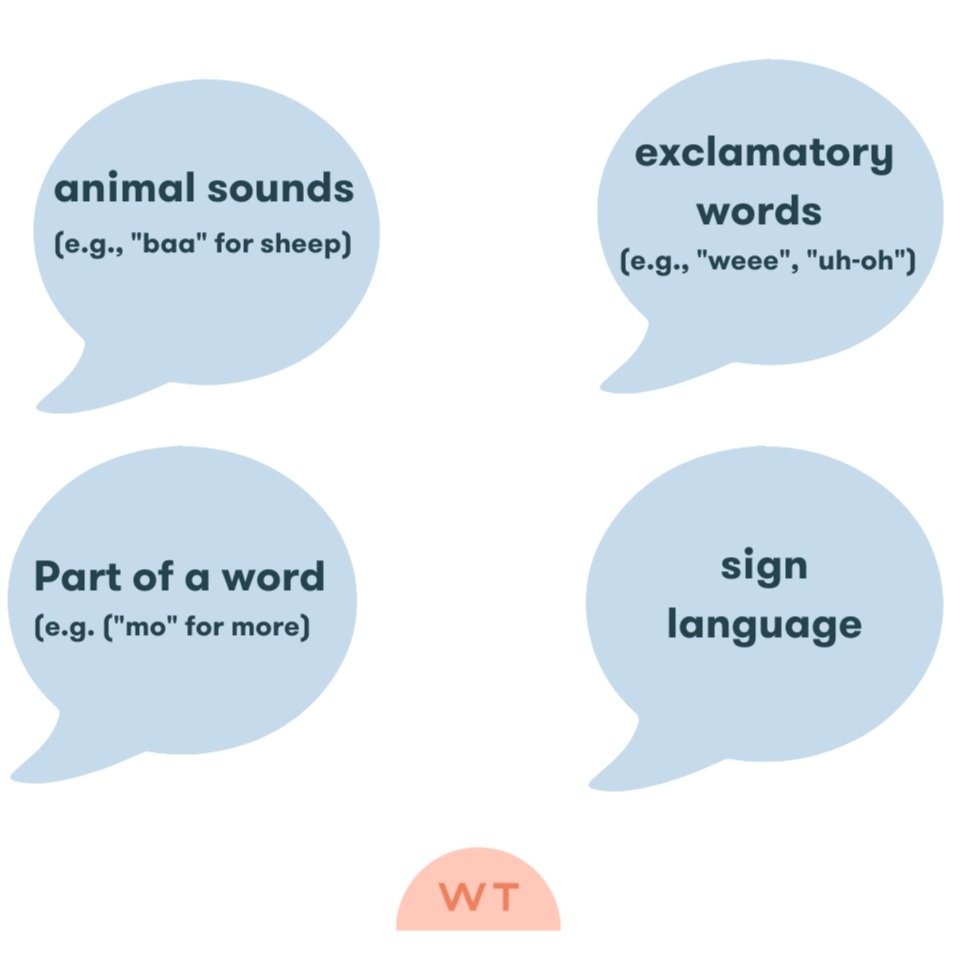
To “count” as a word, your child should be saying the word intentionally, consistently, and in the right context. This tells you it’s not just a happy accident, but that they’re saying that word to communicate something with you on purpose (so amazing!). If your baby doesn’t pronounce their first word correctly, that’s okay, too! It’s very common for babies to just say part of the word, so “ba” for ball, “pup” for up, and “ma” for mama all count.
Here’s what else counts as a first word:
Animal Sounds & Environmental Noises
Yep, you heard us! “Moo” for a cow or “Vroom vroom” for a car count as first words. As long as the sound is used as a substitute for a label (meaning they see a cat in a book, point to it, and say “meow!”) and they use that sound consistently, independently, and in an appropriate context, it counts.
Moo
Baa
Vroom Vroom
Honk
Siren
Meow
Woof
Roar
Exclamatory Words
Exclamatory words are sounds we often use to comment on the world around us. And, when they’re used intentionally and consistently, they absolutely count as baby’s first words!
If your baby drops their food off the highchair tray and says, “Uh oh” that counts because they’re communicating that the food fell to the ground. It also counts if they say, “Wee!” as they go down the slide because they’re communicating that the slide is a fun experience!
Wee!
Uh Oh!
Oh No
Yuck
Yay!
Part Of A Word
A word counts as a first word even if your baby only says part of the word. (Did you get that? 😅 )
Parts of words count because what we’re looking for with your baby’s first words are their attempts to communicate intentionally and with meaning—which they can often do before they’re able to produce all the different speech sounds flawlessly. So “Mo” for more counts, “nana” for banana counts, and any other partial word that follows this pattern counts, too.
Remember, speech is complex! It’s tricky learning how to move your tongue, teeth, lips, and jaw to produce speech. So when little ones are learning to talk, it’s natural that they make talking errors. The more they practice, the clearer their words will become.
“Mo” for more
“Ba” for ball
“Nana” for banana
Sign Language
Toddler signs count as words, too! So long as your little one is using the signs independently, in an appropriate context, and as long as they have signed it a few times, you can go ahead and add it to the list of words they’re “saying”.
Just like with words, remember that the sign doesn’t have to be executed perfectly at this stage to count. Fine motor skills are still developing at this age, so you’re bound to see a lack of precision. And that’s typical!
Related: Sign Language for Toddlers
The Most Common First Words
This comes up a lot, so we thought we’d include a quick rundown of the most common first words we hear. They are:
Mama
Hi
Dada
Yum
No
Bye
Baba or baa-baa
Boo
Yes/yeah
Ball
Did you notice how most of these words rely on those early developing speech sounds we mentioned above?
Language Milestones: A Crash Course for Parents
Now that you know first words typically are said around 12 months, let’s talk through some of the language skills—also known as the baby talking milestones—your child needs to have in place before they can say them.
If you haven’t yet, this is a great time to download our free milestones checklist, so you can follow along and track your baby’s progress as you read this part of the post!
What Is A Milestone?
A milestone is a skill or behaviour that 90% of children typically demonstrate within a specific age range. It’s different from an average, which is a skill or behaviour that nearly half of kids typically demonstrate.

Why Milestones Matter
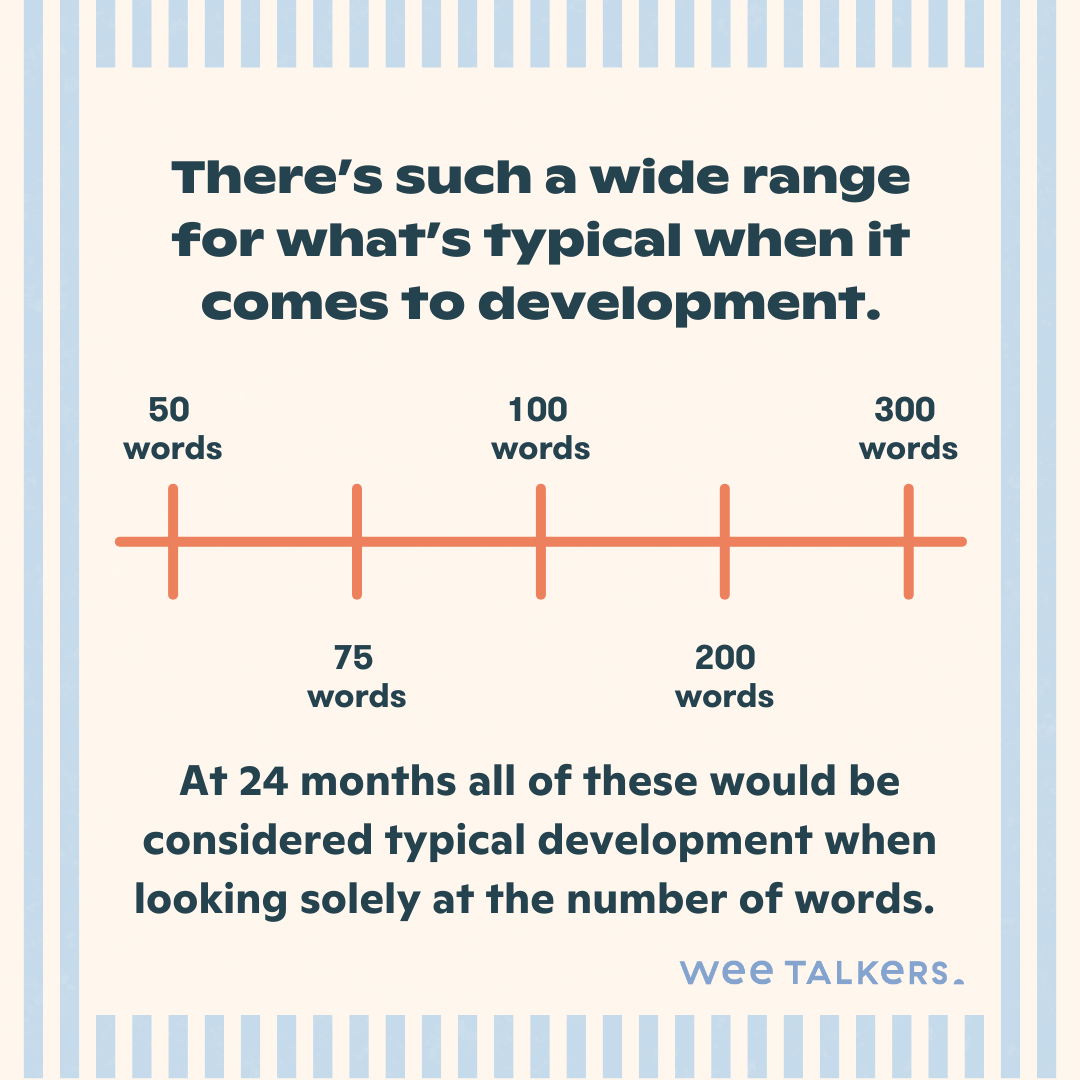
As speech-language pathologists, if a parent or professional has a concern about a child’s language development, one of the first things we’ll do is check to see if they’re meeting milestones, at least within a range. For you as the parent, it’s important to know that there IS a range for what’s considered typical when it comes to baby’s language and speech development. As much as you can, try to avoid comparing what they’re doing to others their age.
Baby Language Milestones from Birth to 12 Months
If your baby hasn’t said their first words yet, you’ll want to first check and see if they are demonstrating the skills that come before first words and develop during the first year of life.
Birth to 3 Month Milestones
By 3 months of age, speech-language pathologists would expect to see that your baby:
Startles at loud sounds
Quiets or smiles when you talk
Seems to recognize your voice (Quiets if crying or makes cooing sounds)
Has different cries for different needs
Smiles at people
4 to 6 Month Milestones
By 6 months of age, we would expect to see that your baby:
Moves their eyes in the direction of sounds
Responds to changes in your tone of voice
Notices toys that make sounds
Pays attention to music
Coos and babbles when playing alone or with you
Makes speech-like babbling sounds like pa, ba, and mi
Giggles and laughs
Makes sounds when happy or upset
7 to 12 Month Milestones
By 12 months of age, we would expect to see that your baby:
Turns and looks in the direction of sounds
Looks when you point
Turns when you call their name
Understands words for common items and people like cup, truck, juice, and daddy
Starts to respond to simple words and phrases, like “No,” “Come here,” and “Want more?”
Plays “people games” with you, like peek-a-boo and pat-a-cake
Listens to songs and stories for a short time
Babbles long strings of sounds, like mimi upup babababa
Uses sounds and gestures to get and keep attention
Points to objects and shows them to others
Uses gestures like waving bye, reaching for “up,” and shaking their head no
Imitates different speech sounds
Says 1 or 2 words, like hi, dog, dada, mama, or uh-oh
12 to 18 Month Milestones
During this time, we’d expect your toddler to continue communicating more and more through gestures, babbling, and words—even if those words aren’t perfect. By 18 months, we look for toddlers to be saying at least 10 words but on average, toddlers typically say around 50.
18 to 24 Month Milestones
We expect to hear quite the little language boom in toddlers between 18 and 24 months! The number of words your child uses will grow at a pretty rapid pace—it can feel like they’re adding a new word to their vocabulary almost every day!
By 24 months, we look for toddlers to by saying at least 50 words but on average, they’ll typically be saying 200-300. Remember, these words don’t need to be pronounced perfectly to “count”!
How To Teach Baby Their First Words
If your baby seems to be meeting milestones but just isn’t quite talking yet, there are things you can do to encourage their first words from home. We have a whole post that teaches you to do just this! Click the link below to read it next.
What To Do If First Words Aren’t Coming
If you’re worried that your child isn’t talking yet, there are a few steps we’d recommend taking:
#1 Understand The Milestones
Milestones are what speech-language pathologists and other professionals use to track development. We use them to help us figure out when a child might need professional support to get back on track!
Don’t forget to download our baby language milestones checklist to help you with this step! We also have one for toddlers if your child is over 12 months old.
#2 Get Their Hearing Tested
Hearing is essential for developing spoken language. Even if you feel like your child can hear well, they might not be hearing perfectly. Hearing problems easily go undetected, even by the most attentive parents! It happens all the time.
Related: Childhood Hearing Tests & How Hearing Affects Speech
#3 Seek Support
If your child isn’t meeting milestones, speak with your child’s pediatrician or schedule a speech and language assessment. Speech therapy services are often free or low-cost depending on where you live.
#4 Encourage Language Development At Home
If your child is a bit behind on their speech and language development—or you’re worried they might be—it’s important to meet them where they’re at. There’s no jumping ahead to words and sentences if those foundational skills aren’t in place first. This probably means setting aside your own goals of having them say X by X date (or whatever they may be) and instead just taking one step at a time at your toddler’s pace.
Our programs can be a big help in teaching you what your child needs to keep moving forward—and how to help them do that from home. If you haven’t before, find the perfect course for you and your child.
As always, we’re in it with you! And because you’re here researching how to help your little one right now, we know you’re so dedicated and doing an incredible job. You’ve got this, and we’re here to help however we can 💛